I’d done it a hundred times before. It was something we were never meant to do, but we did it all the time. It was the end of the day, I was 18 years old, two years into my dream job as an arborist. We’d been clearing powerlines in Mangawhai and I’d been on ground duties. While clearing the site I threw a stub of wood into the chipper. It hit the drums and bounced off.
When you first use chippers, they’re terrifying. Daily use makes you forget the danger they pose.
The stub bounced out, and instinctively I kicked it back in. My other foot slid on the gravel road and my leg slid into the chute. I started pushing the reverse bar, but because I was in the chute, I couldn’t get the right angle to push.
The traffic control stop-go guy saw what was happening and ran over to turn the machine off, leaving me trapped. The other arborist had to turn the machine back on, re-engage the blades and then reverse me out of the machine. It was a pretty grim experience.
As arborists we trained in first aid every six months. My colleague was awesome. When the doctors arrived – one lived just two doors from the site and came to help – they didn’t change anything he’d done. That training we had been given to react in those sorts of situations was really good.
The actual accident was quick. The aftermath, waiting in that drain for two-and-a-half hours, felt endless. Lying there with my own thoughts. They were trying to keep me awake with idle chatter, talking shit that didn’t matter, anything to take my mind off the situation until the helicopter arrived.
To amputate or not?
I immediately had surgery to clean the wound at Whangarei Hospital. They asked me that night if I wanted an amputation. The surgeon said it was probably going to be the best option.
I was pragmatic. I knew it was bad and I knew it wasn’t going to get better. So I was like, whatever the best option is, do it, because the sooner we make a decision, the sooner I can get back to normal.
I may have been a bit too enthusiastic, because the surgeon decided we’d discuss it again the next day, when my parents were there and I wasn’t high as a kite.
My thought process the next day was the same and the amputation was scheduled, but then delayed because I had a temperature. On the fifth day in hospital, they amputated. The accident itself only took about 90% of my foot off, I still had the ankle, but it had been crushed. We could have kept the ankle, but recovery from a broken ankle would be more difficult than recovering from an amputation halfway up the calf.
About three days later – on Christmas Eve – I left hospital.
Learning to walk again
I went to rehab in early January. I hated it. Mentally it was a really hard place to be because I wanted to do every single rehab session available and do everything I possibly could to help myself, but the attitude in there was a bit too ‘woe is me’. I lasted less than a week and begged my parents to take me home.
The period before I got my prosthetic was the hardest part. I had to rely on people and I wanted to be proactive, but there’s very little you can do. It’s just time, waiting for things to heal.
I got my first prosthetic in late February and things became easier. Not easy – every day was still pretty painful, learning to walk is painful, wearing a prosthetic for the first few months is pretty painful and you get blisters and calluses where you’ve never had them before. But at least I had some control and was taking tangible steps in recovery.
Getting back to work
The chipper we had been using that day was only ever meant to be fed by a digger. The chutes in most chippers are longer than a human leg. This one didn’t have that safety feature. The company was prosecuted, but I take responsibility for the accident. It was a stupid mistake I made.
The company was good to me. Looking back, I can see why – I had to testify in court at one point, so being nice worked in their favour. The optimist in me feels like they genuinely cared and felt bad about the accident. They kept my job open, topped up the ACC payment. The CEO even brought in NZ rugby league rep Tawera Nikau, who had also lost a leg, for lunch.
I went back to work six months after the accident. I got back to climbing and working full-time. I was excited to get back to work and some sort of normality. Then two years later I was pulled out of a tree and broke my other ankle. I loved being an arborist, but at that point I figured it was time to cut my losses.
A sporting career
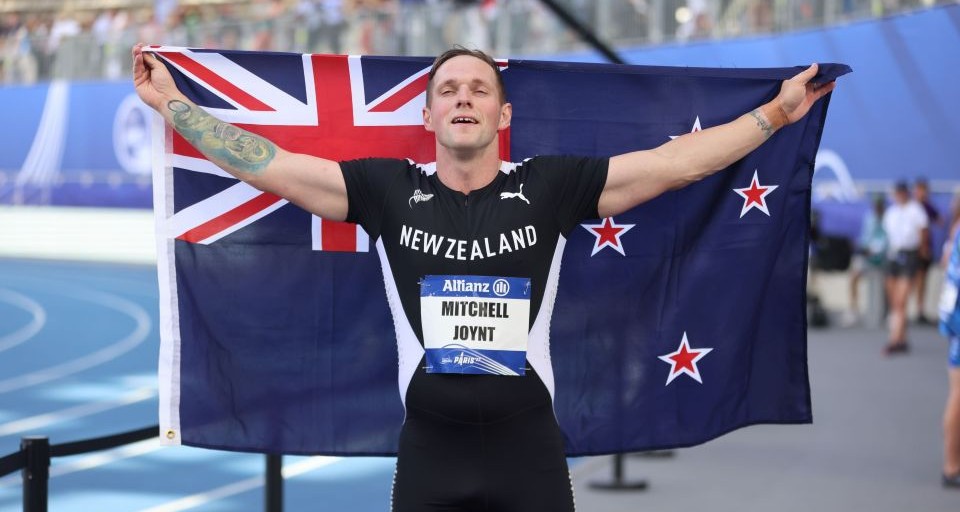
I worked as a landscaper and then as a truck driver, but I’d always loved sports. Losing my leg made me realise I’d taken things for granted. I wanted to make the most out of everything and every limb. Pretty much immediately I decided I wanted to give the Paralympics a crack. It took time to find the right sport – I first tried rowing, then snowboarding where I made the New Zealand team and placed 16th at a World Cup.
I trained for the Auckland Marathon just to tick it off the bucket list. That’s when I met Hamish Meacheam, then CEO of Parafed Auckland. He was coaching athletics and asked me to give it a go. Now, the 200m is my forte – I have two World Championship bronze medals – but I also dabble in the 100m and 400m.
I’ve run the 800m just once in my entire life. I did it to set the world record. I’ll probably do it again some time to lower the record.
I get paid to be an athlete now. It’s not great money, so I coach as well, which I love and means I’m building a business for when I retire from competing.
After competing at the 2024 Paris Paralympics I now have my eye on LA 2028. That’s the ultimate goal. I think I’m probably capable of breaking 22 seconds for the 200m, which would put me in the top echelon of blade runners – there have only been about six dudes to break 22s. Joining that club would be pretty cool.
I was dating Olivia before the accident and we are married now, so she went through all the ups and downs with me. Nobody has been more supportive and caring than her. It shows a lot of strength on her part to be able to shoulder something like that when she was so young (also 18 at the time of the accident) and not just go through it by my side but be an active participant in my road to recovery and then my road to the Paralympics.
Living the dream
Looking back, I think there are a lot of cases where rules are made by someone in an office, with no real knowledge of life on a worksite. Sometimes we were told things we couldn’t do, and it would be OK, we’re obviously going to do that every day, because that’s how we do our job.
Workers and health and safety teams need to understand each other’s worlds. Too often there’s a disconnect and sometimes it’s just not feasible to do things the way an office worker tells you to do them. Other times – like not kicking wood into a chipper – that’s a good rule to have.
In the grand scheme of things, taking the aesthetics out of it, my injury is pretty minor. It was a year of tough rehab, but now there’s nothing I can’t do, there’s no residual pain. I thought being an arborist was my dream job, but that’s because I never really believed I could be a professional athlete. Now, I’m really living the dream.