Most organisations will “do a risk assessment”, fill in a matrix, and move on. Often, the people filling it in have never done the work and only minimally or symbolically engage with the workforce while doing it. This practice gives the illusion of measurement and control but tells us very little about how the work actually unfolds.
From the Human and Organisational Performance (HOP) perspective, managing risk isn’t so much about predicting failure or assigning probability scores, it’s about learning together with our people and valuing the perspectives and insights of those who actually do the work, and then collaboratively building the capacity of our systems to absorb variability, detect drift early, and fail safely.
HOP is a term widely attributed to Dr Todd Conklin and his book The 5 Principles of Human Performance, and it represents more than those five simple statements. It’s a convergence of ideas from Human Performance Improvement, High Reliability Organising, Resilience Engineering, Safety-II, and Safety Differently. It is influenced by publications from INSHPO, the IAEA, the DoE, Hollnagel, Reason, Woods, Dekker, and many others.
Together, these perspectives offer a contemporary way to see and manage risk: through curiosity, collaboration, and the reality of everyday work.
Paperwork tradition
Traditional risk assessments tend to treat work as both ideal and static, commonly referred to as Work as Imagined. Rating ‘likelihood’ or probability becomes a guessing game that encourages argument over learning. It often results in colourful paperwork rather than meaningful insight. One worker once summed up typical risk assessment perfectly: “Oh that. Yeah, that’s where they turn the red boxes into green boxes on paper so the work can get done.”
HOP invites us to ask different questions. How does work really get done? Where is it fragile or forgiving? What would it take for the task to fail safely rather than catastrophically?
These questions move us from risk assessment toward risk understanding.
Look at risk capacity
Risk capacity is the ability of a system to absorb variability, to detect drift, and to fail safely. It shifts our focus from predicting what could go wrong to understanding how well we cope when things inevitably deviate from plan. It’s a more human, more realistic view of operational risk.
HOP encourages us to learn from Work as Done. The messy, adaptive, everyday reality of work. Using tools like the 4Ds (Dumb, Dangerous, Difficult, Different) and 4Ls (Liked, Lacked, Longed For, Learned), we are able to surface how workers actually experience and manage risk in real time.
To make sense of risk capacity, we can look at a series of practical indicators that reveal how much resilience exists before failure occurs. They are:
Exposure to unforgiving energy
How close people are to sources of harm that can’t be negotiated with, like gravity, pressure, or electricity.
Control robustness
How strong and reliable are the barriers or systems that separate people from that energy, especially when work gets busy or messy.
Error tolerance
How much variability the system can absorb before someone gets hurt or the job fails.
Detectability of drift
How easy it is to spot when conditions are changing, weakening, or sliding out of the normal safe zone.
Recovery capacity
How much room there is to fail safely and recover before serious consequences occur.
Variability sensitivity
How easily the system or task falls apart when something unexpected or small changes.
Psychological safety
Whether people feel safe to speak up about weak signals, near-misses, or uncomfortable truths without fear of blame.
Supervisor load
How much time and bandwidth do supervisors have to be present and connected to the actual work.
These are not meant to be scored or ranked, but to tell a story about how much capacity exists in the system. The point isn’t finding a number; it’s about the conversation it provokes.
Managing risk with HOP
The HOP principles offer a practical way to translate capacity thinking into everyday leadership and decision-making:
Error is normal
Systems must be tolerant of inevitable mistakes.
Context drives behaviour
Understand the conditions that shape how work is done; ask about the 4Ds.
Blame fixes nothing
Blame doesn’t fix people or systems. Fault should be a last resort, reserved for intent to harm.
How leaders respond matters
Curiosity before judgment, care before command.
Learning is vital
Build operational learning habits to inform the design of Better Work.
(As we’ve said before, ‘controls save lives’ but only if those controls are designed and maintained with the meaningful engagement of the people who actually use them!)
Learning as the method
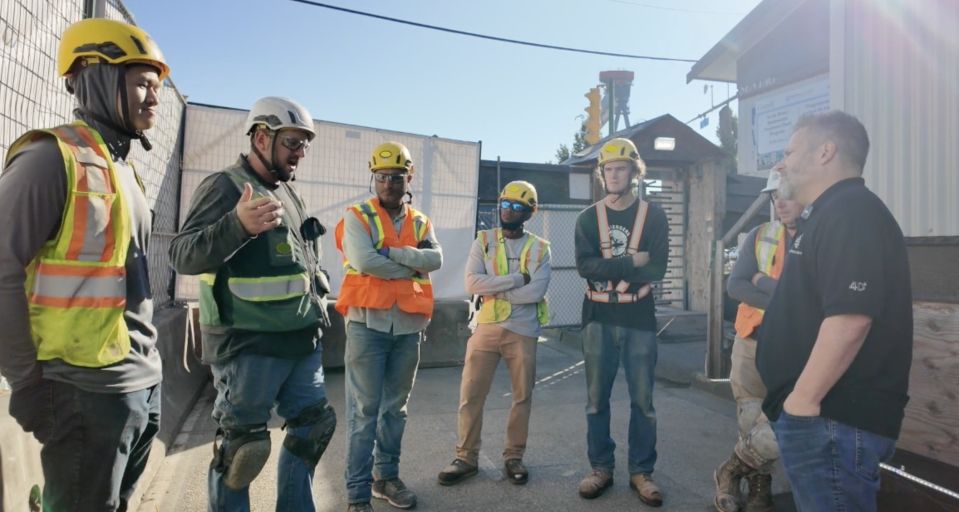
The HOP view of risk management relies on learning, not just after incidents, but before them. Learning Teams and other operational learning methods help organisations explore work as done by creating space for those who do the work to share how they manage risk and variability every day.
By routinely engaging the people closest to the work, we can foresee situations where risk is high and controls are weak. And we can respond collaboratively and effectively.
The 4Ds (Dumb, Dangerous, Difficult, Different) provide a simple and effective way to start those conversations. When teams talk about tasks that feel risky, awkward, or fragile, they’re already doing the real work of risk management.
Where capacity is low
Risk assessment tells us what could go wrong; risk capacity tells us how well we can recover when it does. The goal isn’t perfection; it’s knowledge and preparation. Replace scoring with storytelling, prediction with curiosity. Seek out the places where risk is high and capacity is low and start there.
Start small. One conversation, one Learning Team, one question: How much risk can our system actually hold before someone gets hurt? That’s where the HOP journey begins.
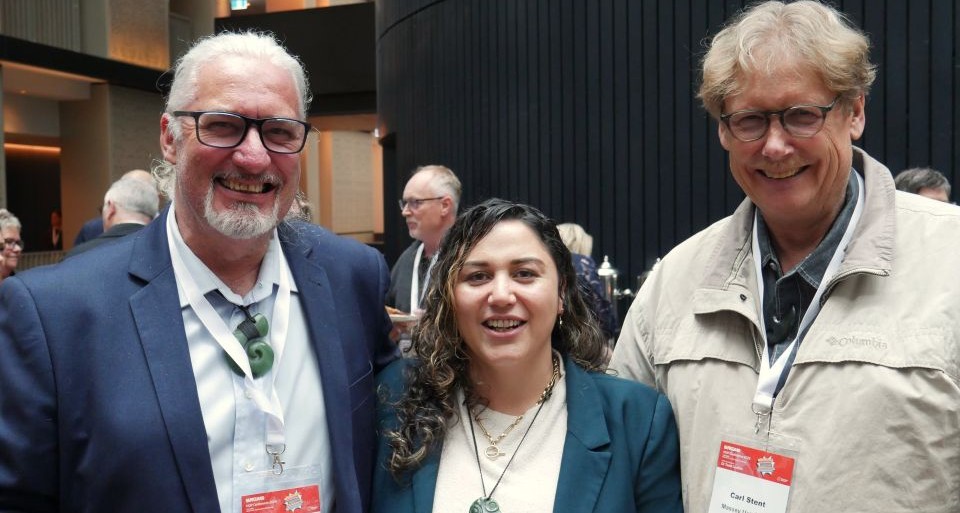
Vancouver-based consultant Jeff Lyth, who works in North America with Learning Terms Inc, was the MC at Safeguard’s recent HOP conference.