Incident - Skin grafts from chemical burns
Issue 204
A labour hire worker required skin grafts after coming into contact with a highly alkaline caustic soda solution while carrying out a routine task without appropriate PPE. PETER BATEMAN summarises.
Context
- A plastics recycling facility included a wash plant to clean incoming material.
- Caustic soda – sodium hydroxide – was pumped from a bulk container into a vat within the wash plant.
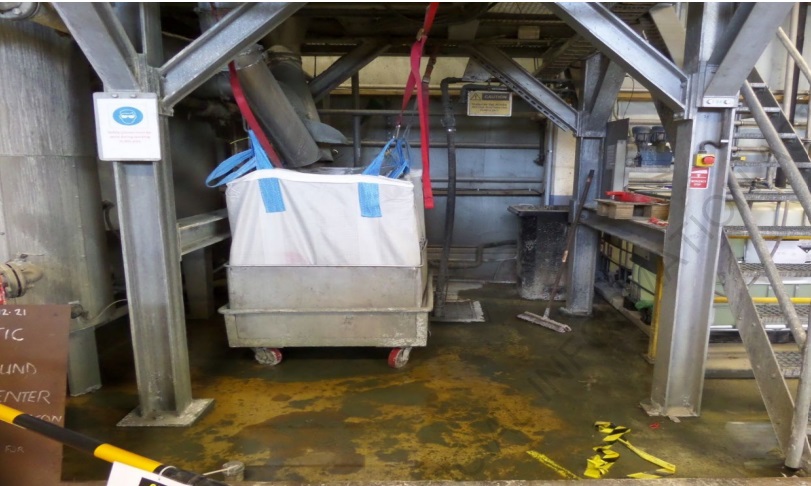
- The area was surrounded by a bund to contain liquid.
- C was a labour hire worker on placement at the facility.
- C had not been briefed on what the liquid in the bund was or what PPE should have been worn while walking in the bund, ie: gumboots.
- He was not wearing footwear that would have protected against alkaline burns.
Detail
- C started his shift at 7.30am and went to the wash plant to see if a bag holding plastic waste need to be changed.
- C entered the bund and found a new bag was needed. C detached the full bag and lowered it onto a trolley.
- C was exposed to liquid in the bund for about three minutes.
- Soon afterwards C felt discomfort in his toes. When the pain worsened he went home.
- C noticed bad blisters on his feet and went to the hospital, which measured a very high alkaline level present.
- C suffered caustic soda burns to the toes on both feet, requiring five skin grafts and eight days in hospital.
- C lost part of the tops of both his little toes.
- A metal grille was later laid over the bund to provide a safe walkway.
Background
- In the hours before C arrived another worker noticed the bulk container was empty and that and that liquid within the bund was white, which was unusual.
- The main hose above the pump had split. The pump was shut down to stop the flow of caustic soda.
- Water was hosed into the bund to dilute the solution that had accumulated.
- The supervisor on the new shift was told about the spill and not to let C change the bags because the bund solution might have been unsafe.
- However, this instruction was not passed on to C.
- The solution in the bund would normally be 2% strength; the solution which caused C’s burns was found to be much higher.
- The design of the bund meant any liquids didn’t drain into a sump but had to be manually pumped out.
Lessons
- Caustic soda causes severe skin burns and eye damage. PPE required includes gloves, protective clothing, eye and face protection, and rubber boots.
- All workers – including labour-hire staff – need to be inducted into their work areas and supplied with appropriate PPE and training.
- Problems encountered in one shift need to be clearly transmitted to the next shift.
- PPE is a last resort. Explore going up the hierarchy of risk controls to minimise or eliminate exposure.
Safeguard Magazine
Subscribe today for health, safety and wellbeing news and insights
{"insiderCTA":{"title":"Safeguard Insider Bulletin","tagline":"The best of Safeguard, straight to your inbox every month. Free","img":"/media/1666/insider-hero.png","buttonLabel":"Sign Up for Safeguard Insider","buttonLink":"https://www.surveymonkey.com/r/sign-up-insider"},"ads":[{"name":"Safeguard National Health \u0026 Safety Conference 2026","img":"/media/2132/55805-tr-safeguard-conference-2026-banner-500x417.jpg","url":"https://safeguard.co.nz/events/safeguard-national-health-safety-conference-2026/","utm_source":"Safeguard","utm_medium":"Safeguard","utm_campaign":"Safeguard","utm_term":"Safeguard","utm_content":""},{"name":"Workdek","img":"/media/1597/workdek.jpg","url":"https://workdek.com/","utm_source":"google","utm_medium":"banner","utm_campaign":"Prevention","utm_term":"workdek","utm_content":""},{"name":"Foundation passport","img":"/media/1596/sitesafe.jpg","url":"https://www.sitesafe.org.nz/training/our-training-courses/?utm_source=SafeGuard\u0026utm_medium=Digital_banner\u0026utm_campaign=Foundation","utm_source":"Safeguard.co.nz","utm_medium":"Banner","utm_campaign":"Foundation+passport","utm_term":"Foundation+passport","utm_content":""},{"name":"SafeSkills H\u0026S Rep Conference Roadshow","img":"/media/2134/55876-tr-safeskills-conference-2026-web-banner-500x417.jpg","url":"https://www.safeguard.co.nz/events","utm_source":"Safeguard","utm_medium":"Safeguard","utm_campaign":"Safeguard","utm_term":"Safeguard","utm_content":""},{"name":"Impac","img":"/media/1592/impac-2.jpg","url":"https://impac.co.nz/consulting/","utm_source":"Safeguard","utm_medium":"Banner","utm_campaign":"Consulting","utm_term":"","utm_content":""},{"name":"SiteSafe May 2023","img":"/media/1695/sitesafe-may-2023.jpg","url":"https://sitesafe.org.nz/","utm_source":"Safeguard","utm_medium":"Safeguard","utm_campaign":"Safeguard","utm_term":"Safeguard","utm_content":""},{"name":"LegalSAFE Conference 2026","img":"/media/2133/55807-tr-legalsafe-conference-2026-banner-500x417.jpg","url":"https://www.safeguard.co.nz/events","utm_source":"Safeguard","utm_medium":"Safeguard","utm_campaign":"Safeguard","utm_term":"Safeguard","utm_content":""}]}