We have created a practical alignment showing how our Te Tiriti principles and HOP principles reinforce each other in everyday work. Rather than treating Te Tiriti as a separate cultural obligation and HOP as a technical or operational framework, we have brought them together into one integrated lens for understanding work, risk, and learning.
This alignment now sits inside our safety conversations, how we talk about controls and verification, and how we surface pressures and conditions that shape human behaviour. The output is simple: a way of working that is culturally grounded, relational, and operationally meaningful – not a new framework, but a clearer, more honest way of seeing how work is really done.
What was the prompt?
The driver was straightforward: we needed a safety approach that genuinely fits Aotearoa. Massey had made strong formal commitments to Te Tiriti, but we heard clearly from staff – Māori and non-Māori – that the real test is what happens in daily practice: in meetings, investigations, planning, and risk conversations. At the same time, our adoption of HOP highlighted the importance of learning from people doing the work, understanding context, and seeing error as information.
Bringing these strands together felt unavoidable. We realised that our systems sometimes privileged technical or hierarchical perspectives, even when HOP was telling us to listen more widely. And Te Tiriti demanded something similar: partnership, participation, transparency, and shared responsibility.
The question became not “Should we link them?” but “Why haven’t we been doing this already?”
What input from Māori?
This work would not exist without Māori colleagues and advisors. Māori staff helped us ensure the alignment was authentic, respectful, and grounded in tikanga.
Three messages stood out:
Relationships before systems. Safety cannot be separated from trust, care, and the way people relate to each other.
Reciprocity and shared accountability. If we want people to speak up about risk, the system must honour what is said and follow through.
Mana-enhancing practice. How we run investigations, engage with incidents, describe hazards, and assign ownership must protect people’s dignity.
The Māori contribution was not a cultural overlay on a technical model – it changed how we saw the work. It made the alignment real, not symbolic.
Linking Te Tiriti and HOP
Interestingly, the connection showed up during practice, not planning.
When we used HOP-informed questions in workshops – What helps success? What makes things hard? What workarounds have become normal? – staff often responded in ways consistent with Te Ao Māori thinking. People talked about reciprocity, relationships, care, and collective responsibility. We began to see how naturally HOP aligned with Te Tiriti aspirations:
- Tino rangatiratanga sits comfortably beside HOP’s focus on local expertise and worker voice.
- Partnering mirrors HOP’s idea that learning is shared, not imposed.
- Active protection reinforces the HOP stance that systems must create the conditions for people to speak honestly and safely.
- Equity resonates with HOP’s emphasis on addressing organisational pressures and conditions, not blaming individuals.
In other words, both Te Tiriti and HOP are trying to solve the same problem: how humans and organisations can work together in ways that are safe, respectful, and resilient.
Feedback from the process
The response has been overwhelmingly positive. Staff have said the alignment “makes the conversations feel more human” and “gives permission to talk about the things that usually sit below the waterline.” Safety reps report stronger engagement. Managers find that risk conversations are more truthful and less defensive. Māori staff tell us the approach feels more honouring of who they are and what they bring.
Of course, it is not finished work. The alignment continues to evolve as we learn how it plays out in different contexts. Some staff want more practical examples; others want deeper training in the Te Ao Māori foundations that sit underneath. We see this as a journey, not a project – one that will continue shaping how we investigate, plan, govern, and learn.
Closing reflection
The alignment of Te Tiriti and HOP has done something important for us: it has made safety less about compliance and more about people. It has grounded our systems in learning and values that already live in Aotearoa, while giving them operational clarity and practical tools.
If there is one message for practitioners, it is this: the moment you bring together cultural principles and human-centred safety thinking, you create the conditions for better conversations, better decisions, and ultimately better work. That is what we are seeking at Massey – a safety system that feels like it belongs here.
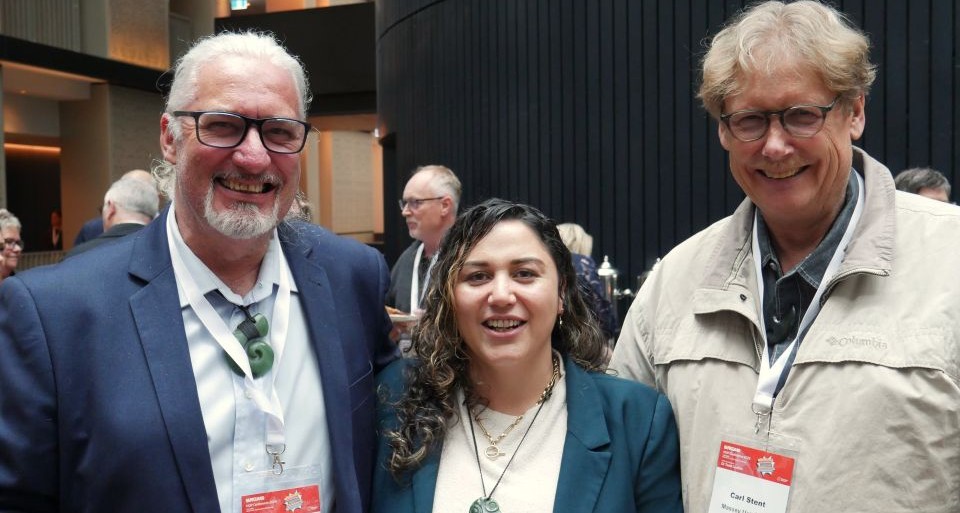
Carl Stent is Director – Occupational Health & Safety and Wellbeing with Massey University Te Kunenga Ki Pūrehuroa.